Drift Tengoku — October 2003
Drag a corner or click a page to turn it
An archive project by Flock MFGNew issue alerts →
About this issue
This October 2003 issue follows street and competition drift builds, driver teams, and tuning parts, with shop features on Silvias and other FR cars. Its coverage ranges from event battles and setup choices to the practical components used to gain steering angle and control.
Page 49 · English draft
Draft translation. Unclear OCR remains flagged; full image proofreading has not been performed.
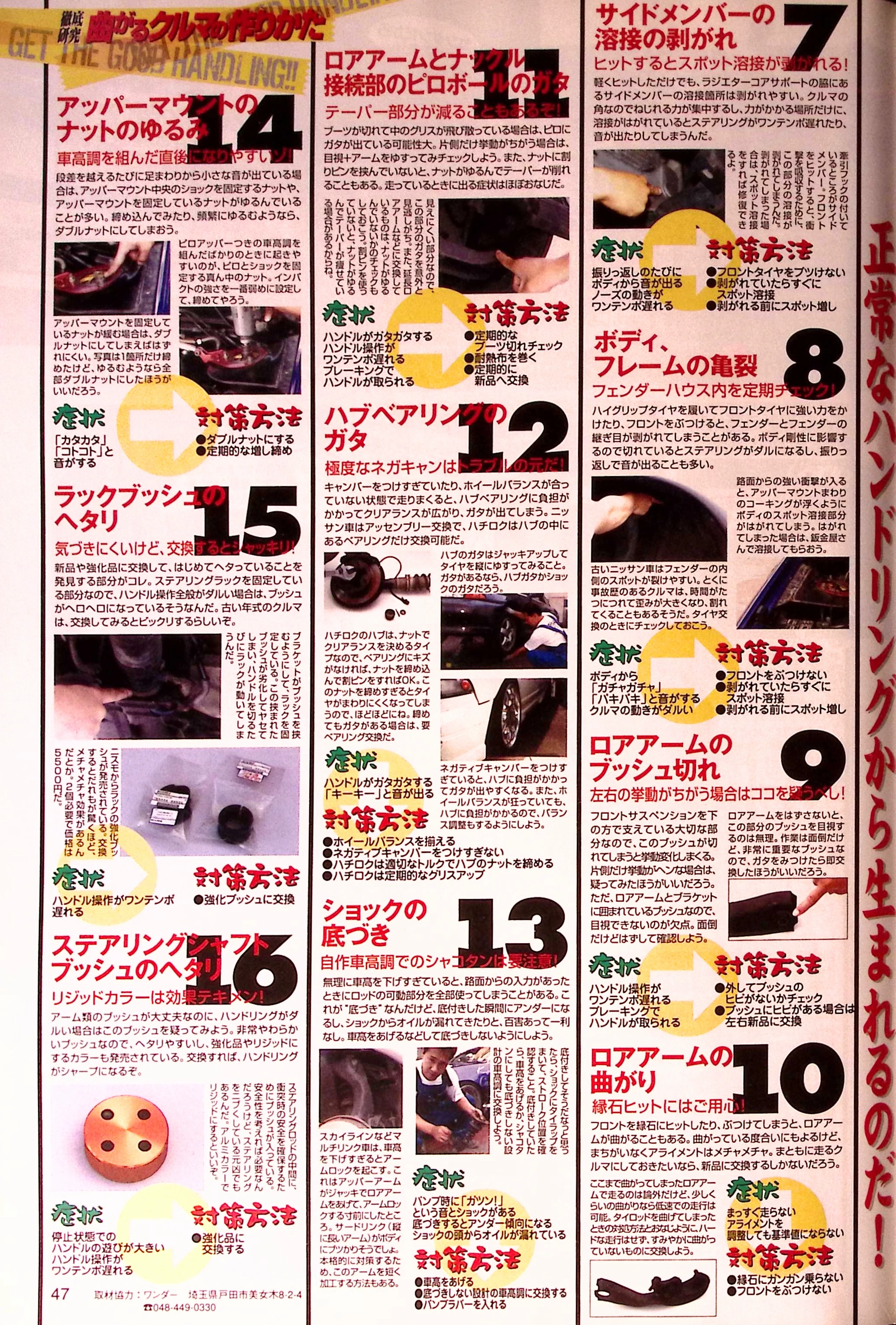
- 1. GET THE GOOD HANDLING!
- 2. Thorough
- 3. How to build a car that corners
- 4. Separated welds
- 5. Side-member…
- 6. Play in the spherical joint at the connection
- 7. Lower arm and knuckle… [fragment]
- 8. An impact can separate spot welds!
- 9. Even a light impact can affect the area beside the radiator support…
- 10. Upper-mount…
- 11. …loose nuts
- 12. 2
- 13. If the boot is split and grease has escaped, the spherical joint… [continued]
- 14. The tapered section may wear too!
- 15. …may produce noise.
- 16. Separated welds can delay steering response…
- 17. Twisting force concentrates at the corner, and this area bears load…
- 18. …the side-member welds can separate easily. The car’s… [continued]
- 20. The towing hook is attached to the side member. When the side member is hit, welds here can separate to absorb the impact. If they have separated… [continued]
- 21. …can be repaired… [fragment]
- 22. …the nut securing the shock at the center of the upper mount, or… [continued]
- 23. If there is a small suspension noise whenever crossing a bump…
- 24. Often happens just after fitting coilovers
- 25. …without a split pin, the nut can loosen and the taper wear… [continued]
- 26. Check visually and shake the tire. Also, if the nut has no split… [continued]
- 27. …play is very likely. If behavior differs on one side…
- 28. …can also occur. The symptoms while driving are almost the same. [continued]
- 29. …it can. [fragment]
- 30. If…
- 31. Normally… [clipped]
- 32. Front
- 33. This hard-to-see area’s play is easily overlooked. On cars with extended lower arms, also check whether the nuts have loosened. If the split pin is absent, a loose nut can allow the taper to wear.
- 34. …often occurs. Try tightening it; if it frequently loosens…
- 35. …use double nuts.
- 36. …the nuts securing the upper mount may be loose…
- 37. Coilovers with spherical-bearing upper mounts…
- 38. Symptoms
- 39. Remedies
- 40. …is likely just after fitting them…
- 41. …the center nut securing them. Set the impact…
- 42. …the spherical bearing and shock are secured…
- 43. …wrench to its weakest setting…
- 44. At each transition…
- 45. …noise from the body…
- 46. The nose’s movement…
- 47. Do not hit the front tires
- 48. If separated, immediately…
- 49. …spot weld. [continued]
- 50. The upper-mount securing…
- 51. …nuts: if loose, use dou…
- 52. …ble nuts to prevent loosening…
- 53. …and tighten it. [continued]
- 54. Steering operation…
- 55. Steering rattles
- 56. Remedies
- 57. Periodic…
- 58. …checks for split boots
- 59. …lags one beat
- 60. The body…
- 61. Add spot welds before separation
- 62. …double nuts everywhere would be better…
- 63. …tightened it, but if it loosens, all…
- 64. …less likely to loosen. The photo shows only one location…
- 65. …would be good.
- 67. …lags one beat
- 68. Under braking…
- 69. …steering pulls
- 70. Wrap heat-resistant material
- 71. Periodic…
- 72. Replace with new parts
- 73. Check inside the fender housings regularly!
- 74. Frame cracks
- 75. “Clack”
- 76. Symptoms
- 77. “Tok-tok”… [noise]
- 78. Remedies
- 79. Use double nuts
- 80. Retighten periodically
- 81. Play
- 82. Hub-bearing…
- 83. …or striking the front can cause the panels in the fender area…
- 84. …to separate at their seam. This affects rigidity…
- 85. Fitting high-grip tires and applying strong loads to the front tires…
- 86. …so if separated, steering becomes sluggish, and transitions…
- 87. Rack-bushing…
- 88. …makes noise
- 89. …driving extensively with this condition loads the hub bearings…
- 90. Setting camber or driving with incorrect wheel balance…
- 91. …often creates noise during transitions.
- 92. …around the upper mount…
- 93. A strong road impact…
- 94. …can lift the seam sealant…
- 95. Deterioration
- 96. Hard to notice, but replacement makes the change clear!
- 97. …increases loads and clearance, creating play. On Nis…
- 98. …san cars the assembly is replaced; on the AE86…
- 99. …only the bearing inside the hub can be replaced.
- 100. Check hub play by jacking up…
- 101. …the body’s spot-welded section…
- 102. …ask a body shop to weld it.
- 103. …can separate. If they have…
- 104. …separated, ask a body shop…
- 105. …the bushings may be very soft and deteriorated. Older cars…
- 106. …this is the area where the problem is discovered. It secures the steering rack…
- 107. Only after fitting new or reinforced parts do you discover the old ones were worn…
- 108. …so if steering is sluggish in general, the bushing…
- 109. If there is play, it may be hub or sho…
- 110. …shake the tire. [direction corrupted]
- 111. …ck play.
- 112. Older Nissan cars’ inner-fender…
- 113. Cars with accident history can, over time…
- 114. …develop more distortion and cracks…
- 115. …spot welds can split easily. Especially…
- 116. …this can happen. When changing tires…
- 117. …arising from… [damaged fragment]
- 118. …the bracket sandwiches the bushing…
- 119. …replacement can be surprising!
- 123. …at… [fragment]
- 126. Bu… [word fragment]
- 127. …sh… [word fragment]
- 128. If there is no damage, tighten the nut…
- 129. …the bearing can be damaged…
- 130. …type that sets clearance…
- 131. The AE86 hub uses a nut to…
- 132. Symptoms
- 133. …check it when changing tires.
- 134. Remedies
- 138. …[isolated grammatical fragment]
- 141. …so be moderate. Tighten…
- 142. Overtightening the nut can…
- 145. From the body…
- 146. The car’s movement is sluggish
- 147. “Clatter-clatter”
- 148. …a popping sound
- 149. Add spot welds before separation
- 150. Do not hit the front end
- 151. If separated, immediately…
- 152. …spot weld.
- 153. Nismo offers reinforced rack bushings. Replacement is reportedly so effective that everyone is surprised. Two are required, and the price is ¥5,500. [whether price is per set needs source review]
- 157. If play remains even after tightening, the bearing…
- 158. Symptoms
- 159. …must be replaced.
- 160. Excessive negative camber…
- 161. Split bushings
- 162. Lower-arm…
- 163. Remedies
- 164. Steering rattles
- 165. A squealing sound occurs
- 166. …and play develops more easily. Also, whe…
- 167. …too much loads the hub…
- 168. …loads the hub, so wheel ba…
- 169. …lance should also be adjusted.
- 170. …el imbalance also…
- 171. The front suspension is supported from below…
- 172. If behavior differs left to right, suspect this area!
- 173. Without removing the lower arm…
- 174. …visually inspecting this bushing…
- 175. Symptoms
- 176. Remedies
- 177. AE86: grease periodically
- 178. Correct wheel balance
- 179. AE86: tighten the hub nut to the correct torque
- 180. Avoid excessive negative camber [degree qualifier clipped]
- 181. If behavior is strange on only one side…
- 182. …this important bushing, if split…
- 183. …is an important part supporting it from below…
- 184. …can greatly change behavior…
- 185. …it should be replaced.
- 186. …is impossible. The work is troublesome…
- 187. …but this is a very important bushing…
- 188. …so replace it immediately if play is found…
- 189. …lags
- 190. Steering input lags one beat
- 191. Replace with reinforced bushings
- 193. Bottoming out
- 194. Shock…
- 195. However, between the lower arm and bracket…
- 196. …this bushing is enclosed…
- 197. …so it cannot be seen directly. It is troublesome…
- 198. …but worth suspecting.
- 199. Steering-shaft…
- 200. If ride height is excessively low, road inputs…
- 201. Symptoms
- 202. …but remove it and inspect it.
- 203. Remedies
- 204. Remove it and check the bushing…
- 205. If the arm bushings are healthy but handling is slug…
- 206. …gish, suspect this bushing. It is very soft…
- 207. …can use up the rod’s entire travel. This…
- 208. …has no benefit. Raise ride height or otherwise prevent bottoming.
- 209. …is bottoming out. The instant it occurs, understeer…
- 210. …occurs, and oil may leak from the shock: all harm and no benefit…
- 211. Steering input…
- 212. …lags one beat
- 213. Under braking…
- 214. …steering pulls
- 215. Replace both sides with new parts
- 216. If the bushings have cracks…
- 217. Check for cracks
- 218. If bottoming is suspected, put a tie on the shock rod to check the travel position. If it is bottoming, raise the ride height or fit coilovers that retain travel at the desired lowered height.
- 219. A bushing between the steering rods provides collision safety. It may be needed for safety, but also contributes to sluggish steering. An aluminum collar makes it rigid. [final wording clipped; historical article claim]
- 220. …the soft bushing deteriorates easily. Reinforced replacements and rigid…
- 221. …mounting collars are available. Replacing it makes handling…
- 222. …sharper!
- 223. Bending
- 224. Lower-arm…
- 225. …that is how it works!
- 226. Skyline…
- 227. …the arm may bend. Depending on the degree of bending…
- 228. Beware curb impacts!
- 229. Striking a curb or hitting the front can bend the lower ar…
- 230. …the lower arm with a jack…
- 231. …arm lock occurs. This…
- 232. …the upper arm…
- 233. …lowering too far causes arm…
- 234. …link-suspension cars, ride height…
- 235. Symptoms
- 236. …alignment is certainly badly disrupted. To make the car drive properly…
- 237. …replacement with a new part is the only option.
- 238. A lower arm bent this badly…
- 239. …is unsafe to drive with, but slight…
- 240. Symptoms
- 241. Excessive steering free play
- 242. When stationary…
- 243. Symptoms
- 244. Remedies
- 245. With reinforced parts…
- 246. …replace it.
- 247. …just before arm lock…
- 248. …raised the arm to just before arm lock…
- 249. …the third link… [clipped]
- 251. …looks about to hit the body, doesn’t it?
- 252. Tends toward understeer when bottoming
- 253. …a sound and impact occur
- 254. A “clunk!” during bump
- 255. Oil leaks from the shock’s top
- 256. Remedies
- 257. …replace it with a straight one.
- 258. Do not drive hard; promptly replace the bent…
- 259. …as with the remedy for a bent tie rod, do not drive har…
- 260. …a small bend may permit low-speed driving…
- 261. …similar to bending a tie rod…
- 262. Remedies
- 263. Even if alignment…
- 264. …is adjusted, it cannot reach specification [ending clipped]
- 265. Cannot drive straight
- 266. 47
- 267. …lags [damaged fragment]
- 268. Steering input…
- 269. Reporting assistance: Wonder [company name clipped]
- 270. 8-2-4 Bijogi, Toda, Saitama Prefecture
- 271. …there is a modification method.
- 272. To address it thoroughly…
- 273. …shorten this arm…
- 274. Insert a spacer
- 275. Raise ride height
- 276. Replace with coilovers designed to avoid bottoming
- 277. Avoid repeatedly striking curbs
- 278. Do not hit the front end
- 279. 048-449-0330